
Oremus - Catholic Bible&Prayer
Bíblia OfflineBooks & Reference
4.96.60K Reviews
- Version
- 1.7.1
- Installs
- 10.00M
- Age Rating
- Everyone
Screenshots



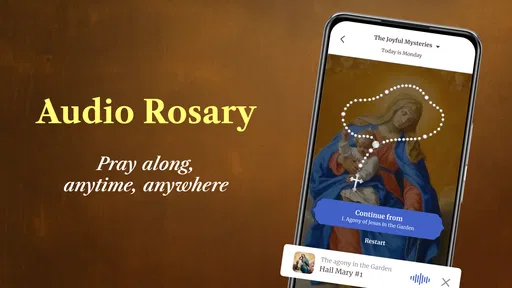
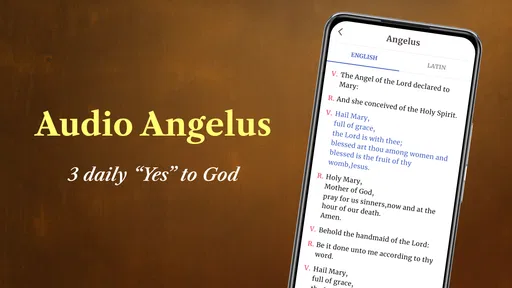


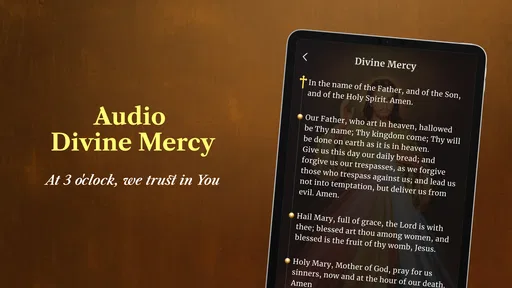
Our Review of Oremus - Catholic Bible&Prayer
 Analysis by Appyee
I spent time with Oremus - Catholic Bible&Prayer as a practical reading and prayer companion rather than treating it like a simple digital book. It brings the Catholic Bible together with daily Gospel reading, rosary material, Mass-related content, audio devotionals, and a liturgical calendar. That combination makes it more useful for a repeatable routine than for occasional reference alone.
The app comes from Bíblia Offline and sits in the Books & Reference category. It is free to install, suitable for Everyone, and has reached over 10 million installs with a 4.9 average from around 937 thousand ratings. Those figures suggest that it has found a broad audience, but they do not replace personal fit: the real question is whether its Catholic focus and collection of devotional tools match the way you pray and read.
How I built a simple daily routine with Oremus
My most natural starting point was the daily Gospel. Instead of opening the app with no plan and browsing until something caught my attention, I used the liturgical calendar as the structure for the session. I would check the day’s entry, read without rushing, and then move to a prayer or rosary section when I wanted to continue. This small order matters because it turns several separate resources into one habit.
The app works especially well for someone who wants a compact Catholic routine on a phone. A morning session can begin with the Gospel, while an evening session can use a rosary or an audio devotional when reading feels less convenient. I also found that the Mass-related material gives the app a useful place in a Sunday routine, even for people who already use a printed missal or attend Mass regularly.
One realistic use case is a commuter who has a few quiet minutes before work. Rather than carrying a Bible, prayer book, rosary guide, and calendar separately, that person can open Oremus and choose one focused activity. The audio option is a particularly sensible alternative when looking at a screen is impractical, although I would still prepare the desired content before starting instead of assuming every moment will be equally convenient.
The Catholic orientation is important. This is not a general-purpose Bible reader with a few religious extras added around it. Its identity comes from connecting Scripture with prayer, the rosary, Mass, devotional listening, and the liturgical rhythm. For a Catholic user, that focus reduces the need to jump between unrelated apps. For someone seeking a broad interfaith library, a study Bible with extensive denominational options, or a neutral reference tool, another app may be a better match.
I also liked the possibility of using it in different lengths of session. A short visit can mean reading the daily Gospel and leaving. A longer visit can include the rosary or audio devotionals. This prevents the app from feeling like a task that must always take the same amount of time. The best routine is the one I can repeat, not the one that looks most ambitious on the first day.
Settings and choices worth checking early
Before making Oremus part of a regular routine, I recommend exploring the available sections and any reading, audio, calendar, or display choices the current version exposes. The app is on version 1.6.5 and supports Android 6.0 or later, so compatibility is broad, but the experience can still vary depending on the phone, screen size, audio setup, and personal preferences.
I would first decide whether the app is going to be primarily a reading tool, a prayer guide, or an audio companion. That decision changes how I approach it. A reader may care most about comfortable text and quick navigation. Someone using it for prayer may value a predictable path from the Gospel to the rosary. An audio listener should pay attention to playback controls and make sure the phone is ready for uninterrupted listening.
It is also worth checking how the liturgical calendar is presented before relying on it for planning. I treat the calendar as a helpful orientation point, not as a replacement for every parish-specific announcement. Local Mass times, parish changes, feast-day customs, and community events are separate matters. Oremus can support preparation, but it should not be expected to know the details of a particular church.
Another useful habit is to adjust the physical environment along with the app. If I am reading at night, I lower the phone’s brightness and avoid turning a reflective prayer session into a notification-heavy browsing session. If I am using audio, I choose a quiet place or headphones and keep the phone stable. These are not glamorous tricks, but they make the devotional material easier to use consistently.
The free model makes it easy to try the core experience without committing money. At the same time, the app includes optional in-app purchases ranging from $1.99 to $29.99 per item. I would not buy anything immediately. I would first establish whether the free experience fits my routine, then decide whether an optional purchase solves a real problem for me. That approach is especially sensible for a devotional app, where consistency matters more than collecting every available resource.
Faster patterns for repeat users
Experienced use is less about discovering a secret button and more about removing unnecessary decisions. I found the most efficient pattern was to give each part of the app a role: the calendar tells me where to begin, the Gospel provides the reading, and the prayer or audio sections extend the session when I have more time. This avoids opening the app with an unfocused question such as “What should I do today?”
A second pattern is to match the feature to the situation. I use text when I want to pause over a sentence, audio when my eyes are occupied, and the rosary material when I want a guided structure rather than an open-ended reading session. The same phone can therefore support different kinds of attention. Trying to force every session into the Bible reader would make the app less flexible than it actually is.
I would also create a personal rhythm around the liturgical calendar instead of treating it as a decorative section. For example, I might read the daily Gospel in the morning, return to a prayer during a break, and use an audio devotional later. The important point is not the exact timetable; it is that the calendar gives the routine a changing focus while the overall pattern stays familiar.
For families, the app can be used as a shared starting point, but I would keep expectations realistic. One person can read the Gospel aloud, another can follow the text, and the group can decide whether to continue with a rosary or devotional audio. The phone should support the conversation rather than dominate it. A printed Bible may still be preferable when several people need to read at once.
For older relatives or anyone less comfortable with mobile apps, I would prepare the route in advance and avoid switching between too many sections. Showing one feature at a time is more helpful than explaining the entire catalog. The app’s range is a strength for experienced users, but that same range can feel busy to someone who only wants a straightforward prayer text.
One non-obvious trade-off is that an all-in-one app can reduce friction while also encouraging over-browsing. When Bible reading, audio, rosary content, and calendar material are close together, it is easy to keep tapping instead of finishing a quiet moment. I get better results when I choose the purpose of the session first and close the app once that purpose is complete.
Where the all-in-one approach has limits
Oremus is strongest as a devotional companion, not necessarily as a replacement for every Catholic resource. A serious Scripture student may want extensive commentary, cross-references, original-language tools, scholarly notes, or advanced search. Those needs usually point toward a dedicated study Bible or research platform. Oremus can remain useful beside that tool, especially for daily prayer, but it should not be judged as though it were designed for academic study.
There is a similar limit with parish life. The presence of Mass-related content and a liturgical calendar is valuable, but the app cannot substitute for local pastoral guidance. If I need a parish schedule, sacramental preparation, community announcements, or a conversation with a priest, I need a local source or person. Oremus is a personal resource, not a complete parish-management system.
The audio devotionals are convenient, but audio is not always the best format. In a crowded environment, with a weak speaker, or when I want to compare passages carefully, text is more dependable. Audio also changes the pace of prayer: it can help me stay focused, yet it can make me follow someone else’s rhythm rather than my own. I see it as an option to alternate with reading, not a universal replacement.
There is also a practical screen limitation. A phone is portable and private, but it is smaller than a printed Bible and less comfortable for group reading. Long sessions may be easier on a larger device or with a physical book. Anyone who dislikes reading on a phone should not assume that a large feature list will overcome that basic preference.
The app’s broad device compatibility is helpful for people using older Android phones, but the minimum operating system still matters. I would check that a device runs Android 6.0 or newer before planning around it. On a supported phone, I would also keep the app updated when convenient, since version 1.6.5 may not behave identically on every handset or audio setup.
Privacy and notification preferences are worth considering in the same practical way as any app used during prayer. I prefer to keep interruptions under control and to decide when I want to open the app rather than let the phone dictate the moment. I would review the phone’s own notification controls and audio behavior before using Oremus in a quiet setting.
Who should use it, and who should choose something else?
I would recommend Oremus to Catholics who want one accessible place for Scripture, daily Gospel reading, rosary support, audio devotionals, and the liturgical calendar. It is particularly suitable for people building a small daily habit, travelers who want fewer books in a bag, and users who move between reading and listening depending on the day.
It also makes sense for someone returning to regular prayer after a long break. The daily Gospel offers a clear entry point, while the other sections provide ways to continue without requiring a complicated study plan. I appreciate that flexibility because it lets a person start with a modest routine and expand only when the habit feels natural.
I would be more cautious about recommending it to users who need a highly specialized Bible study environment, a large collection of translations, deep academic annotation, or detailed parish communication. Those users may be happier with a dedicated study platform, a printed reference Bible, or a local church resource. Oremus can still complement those choices, but it may not be the main tool they need.
The age rating of Everyone makes it approachable for a wide household audience, although suitability in practice still depends on how parents or caregivers want children to use a phone. For shared family prayer, I would set a clear purpose and supervise the first few sessions, not because the app is difficult, but because its multiple sections can lead younger users away from the intended activity.
My final assessment after making it a habit
After using Oremus as a routine rather than merely sampling its screens, I see its main achievement clearly: it joins several Catholic practices in a way that encourages return visits. The Bible, daily Gospel, rosary, Mass-related material, audio devotionals, and liturgical calendar each serve a different moment, and the value comes from moving between them with intention.
The app is free, widely accessible, and backed by a strong user response, with around 6.2 thousand written reviews alongside its high average rating. I would still judge it by daily usefulness rather than popularity. In my experience, its best quality is not any single section; it is the reduced friction of having a coherent Catholic prayer routine in one place.
My advice is to begin with one repeatable path: open the calendar, read the daily Gospel, and choose either a rosary or audio devotional only when it genuinely fits the time available. Check the settings that affect reading and listening, resist the urge to browse endlessly, and consider optional purchases only after the free experience has earned a place in your day.
Oremus is a strong choice when you want a focused Catholic prayer companion rather than a full academic Bible-study system. I would recommend it to a friend who wants to pray more regularly, carry fewer resources, and adapt between reading and listening. I would point that friend elsewhere only if advanced Scripture research, local parish information, or group-friendly printed reading mattered more than convenience.
Privacy and Permissions
See what permissions an app requests and how it handles your data.
- Identity
- find accounts on the device
- Contacts
- find accounts on the device
- Phone
- read phone status and identity
- Photos/Media/Files
- read the contents of your USB storage, modify or delete the contents of your USB storage
- Storage
- read the contents of your USB storage, modify or delete the contents of your USB storage
- Wi-Fi connection information
- view Wi-Fi connections
- Device ID & call information
- read phone status and identity
- Other
- view network connections, create accounts and set passwords, full network access, read sync settings, run at startup, draw over other apps, control vibration, prevent device from sleeping, toggle sync on and off, Google Play license check, read Google service configuration
Verdict
Strengths of Oremus - Catholic Bible&Prayer
- Includes Bible readings, prayers, and Catholic devotional content in one app.
- Useful for building a consistent daily prayer routine.
- Simple interface makes core content easy to find.
- Suitable for personal reflection, meditation, and spiritual study.
- Provides convenient access to faith resources while traveling.
Limitations of Oremus - Catholic Bible&Prayer
- Some features or content may require an internet connection.
- The amount of material can feel limited for advanced Bible study.
- Navigation may take time to learn for first-time users.
- Prayer content may not match every Catholic tradition or preference.
- Notifications can become distracting if too frequently enabled.
Other Releases by Bíblia Offline
View All
Bible Offline-KJV Holy Bible
Books & Reference4.9

Bible-Daily Bible Verse
Books & Reference4.8

Bible For Women-Holy Bible KJV
Books & Reference4.9

Holy Bible-Large Print
Books & Reference4.9
Similar Picks in This Category
View All
Google Play Books & Audiobooks
Google LLC4.7

네이버 - NAVER
NAVER Corp.3.5

Wattpad - Read & Write Stories
Wattpad.com3.7

King James Bible - Verse+Audio
Ozion4.8
Bible Offline-KJV Holy Bible
Bíblia Offline4.9

Amazon Kindle: Reading App
Amazon Mobile LLC4.8
Frequently Asked Questions
What is Oremus - Catholic Bible&Prayer?
Oremus - Catholic Bible&Prayer is a faith-based mobile app designed for Catholic users who want convenient access to Scripture and daily prayer resources. It generally brings Bible reading, devotional content, traditional prayers, and spiritual reflections together in one place. The app can be useful for personal prayer, Bible study, or maintaining a regular Catholic prayer routine while traveling or away from home.
Does Oremus include a Catholic Bible and traditional prayers?
Yes, the app is intended to provide Catholic-oriented Bible content along with a selection of prayers and devotional materials. Depending on the version and available content, users may find familiar prayers, reflections, and resources connected with Catholic worship and spiritual practice. Before relying on a specific translation or prayer collection, it is worth checking the in-app description and settings, as content can vary between updates and platforms.
Can I use Oremus - Catholic Bible&Prayer without an internet connection?
Offline availability may depend on the particular feature and app version. Some Bible passages or prayer resources may be stored on the device after installation or loading, while other content could require an internet connection. If offline prayer is important to you, test the app in airplane mode after downloading it. This is especially helpful before travel, retreats, or situations where mobile data and Wi-Fi are unavailable.
Is Oremus - Catholic Bible&Prayer free to download and use?
The app may be available as a free download, but users should review the store listing carefully for advertisements, optional purchases, subscriptions, or premium content. Free access does not always mean every Bible resource or devotional feature is included without limitations. Check the current Google Play or App Store information before installing, and review any payment screen carefully so you understand whether a charge is one-time or recurring.
Is Oremus suitable for beginners and daily Catholic prayer?
Oremus can be suitable for beginners because a prayer app offers a more approachable way to start reading Scripture and developing a consistent spiritual routine. Users who are new to Catholic prayer may appreciate having Bible passages and familiar prayers gathered in one application. More experienced Catholics may also use it as a portable supplement, although it should not necessarily replace parish guidance, printed resources, or advice from a priest.
